


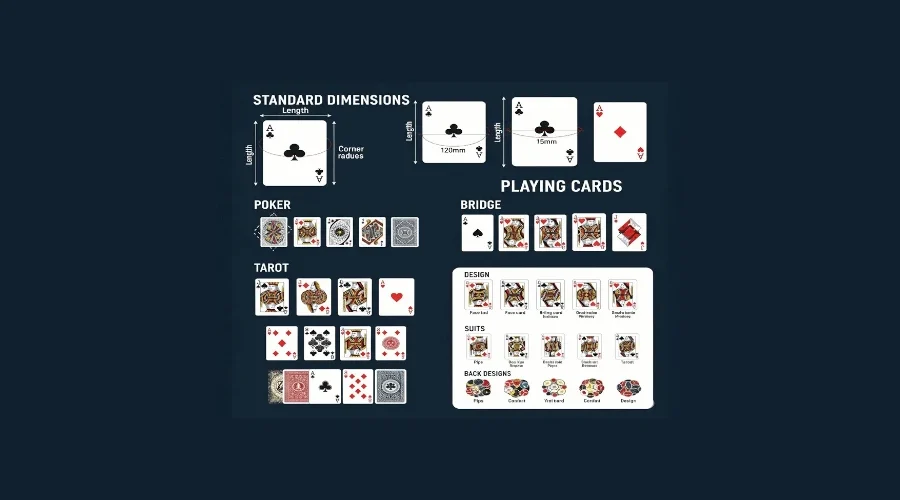
Standard playing cards measure 2.5 x 3.5 inches. This is commonly known as poker size. Playing card dimensions vary significantly by game type. They also differ by region and intended use. This comprehensive guide covers every measurement you need. We’ll explore bridge cards to Magic: The Gathering dimensions. You’ll learn about tarot decks and Yu-Gi-Oh cards too.
What is the Size of a Playing Card?
The standard size of a playing card is poker size. Here are the exact measurements you need to know:
- Inches: 2.5 x 3.5 inches
- Millimeters: 63.5 x 88.9 mm
- Centimeters: 6.35 x 8.89 cm
- Pixels (300 DPI): 750 x 1050 pixels
This is the most common playing card size worldwide. Casinos use these dimensions for their games. Home games and standard card decks follow this size too.
Standard Playing Card Dimensions: Complete Size Chart
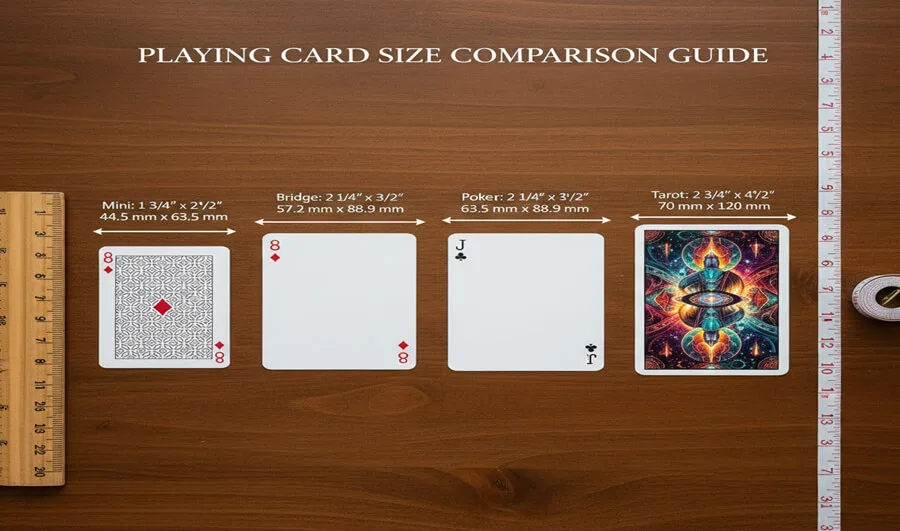
Here’s a comprehensive comparison of playing card sizes. This chart covers different formats with exact measurements:
| Card Type | Inches | Millimeters | Centimeters | Pixels (300 DPI) |
|---|---|---|---|---|
| Poker (Standard) | 2.5 x 3.5 | 63.5 x 88.9 | 6.35 x 8.89 | 750 x 1050 |
| Bridge | 2.25 x 3.5 | 57.15 x 88.9 | 5.72 x 8.89 | 675 x 1050 |
| Mini | 1.75 x 2.5 | 44.45 x 63.5 | 4.45 x 6.35 | 525 x 750 |
| Jumbo | 3.5 x 5 | 88.9 x 127 | 8.89 x 12.7 | 1050 x 1500 |
| Tarot | 2.75 x 4.75 | 70 x 120 | 7 x 12 | 825 x 1425 |
| Square | 3 x 3 | 76.2 x 76.2 | 7.62 x 7.62 | 900 x 900 |
Playing Card Thickness and Weight
How Thick is a Playing Card?
A standard playing card measures 0.2mm to 0.3mm thick. That converts to 0.008 to 0.012 inches in thickness. Premium casino-grade cards are often slightly thicker at 0.31mm to 0.35mm. The extra thickness provides enhanced durability for heavy use.
The thickness of a playing card affects several important factors:
- Shuffling ease and card handling
- Overall durability and longevity
- Card feel during gameplay
- Deck flexibility when fanning cards
Weight of Playing Cards
- A complete deck of 52 standard playing cards has specific weight ranges. The weight depends on the material used in manufacturing.
- Standard paper decks typically weigh 90-100 grams total. That’s approximately 3.2-3.5 ounces for the entire deck. Plastic-coated decks weigh slightly more at 95-110 grams. Full plastic decks are the heaviest at 100-120 grams.
- Individual card weight averages 1.7-2.0 grams per card. This weight provides good handling without feeling flimsy.
Deck of Cards Box Dimensions
Standard deck of cards packaging varies by manufacturer. However, common box sizes follow predictable patterns in the industry.
Bicycle Cards Box dimensions:
- Tuck box measures 2.625 x 3.625 x 0.75 inches
- That’s 66.7 x 92 x 19 mm in metric
- Total weight with cards is approximately 95-100 grams
Standard poker deck box measurements:
- Typical dimensions range from 2.5-2.75 x 3.5-3.75 x 0.75-1 inch
- The box accommodates 52 cards plus jokers comfortably
The dimensions of a deck of cards box minimize extra space. This design prevents cards from shifting during transport and storage.
Popular Playing Card Formats Explained

Poker Cards (Standard Size)
Poker card dimensions of 2.5 x 3.5 inches represent the global standard. These dimensions are used across multiple card game types. Casino games rely on this size for consistency. Home poker nights use these dimensions too. Trading card games follow this standard as well. Most commercial card decks use poker size.
The size of poker cards balances comfortable hand-holding with functionality. There’s adequate space for design elements and text. The dimensions ensure readability across the card faces.
Bridge vs Poker Card Size
Bridge cards are narrower than poker cards by a quarter inch. Bridge cards measure 2.25 inches wide compared to poker’s 2.5 inches. Both share the same 3.5-inch height for consistency.
Bridge-size playing cards work better for certain games. They’re preferred when players hold many cards simultaneously. Games like Bridge, Rummy, and Canasta benefit from this size. The narrower width makes fanning and organizing large hands easier. Bridge cards are especially popular throughout Europe.
Mini Playing Cards
Mini card dimensions measure 1.75 x 2.5 inches exactly. These smaller cards serve several practical purposes in the market.
They’re ideal for travel games and portable entertainment. Promotional giveaways often use mini cards for marketing. Compact storage is another key advantage they offer. Children’s smaller hands can grip them more easily too.
Despite their smaller size, mini playing cards maintain the standard ratio. This keeps gameplay familiar even with reduced dimensions.
Jumbo Playing Cards
Jumbo card size measures 3.5 x 5 inches for maximum visibility. These oversized cards serve specific purposes where readability matters most.
Stage magic performances rely on jumbo cards for audience visibility. Classroom educational games use them so all students can see. Senior-friendly card games benefit from the larger print and symbols. Group activities where distance viewing is needed work perfectly.
Trading Card Game Dimensions
Magic: The Gathering Card Size
Magic: The Gathering cards use standard poker dimensions exactly. MTG cards measure 2.5 x 3.5 inches or 63.5 x 88.9 mm. At 300 DPI, they convert to 750 x 1050 pixels. The corner radius measures approximately 3.5mm for smooth edges.
The dimensions of Magic cards match standard playing cards perfectly. This makes them compatible with most card sleeves on the market. Storage solutions designed for poker-size cards work great for MTG.
What is the dimensions of a MTG card? They’re identical to poker cards in every measurement. This explains why Magic card size became the TCG standard.
Yu-Gi-Oh Card Dimensions
Yu-Gi-Oh cards are smaller than standard playing cards by design. They measure 2.31 x 3.37 inches or 59 x 86 mm. This format follows the Japanese size standard for trading cards. The slightly smaller dimensions create a unique look and feel.
The size of a Yu-Gi-Oh card requires specific accessories. Players need card sleeves designed for this narrower format. Standard poker-size sleeves won’t fit Yu-Gi-Oh cards properly.
Standard TCG Card Size
Most Western trading card games follow the poker-size standard. Magic: The Gathering uses 2.5 x 3.5 inches consistently. Pokémon cards in Western markets match this size too. Marvel and Disney Lorcana follow the same dimensions. Flesh and Blood uses poker size as well.
This standardization benefits players by allowing universal sleeve compatibility. Storage boxes and binders work across multiple game systems.
Tarot Card Dimensions
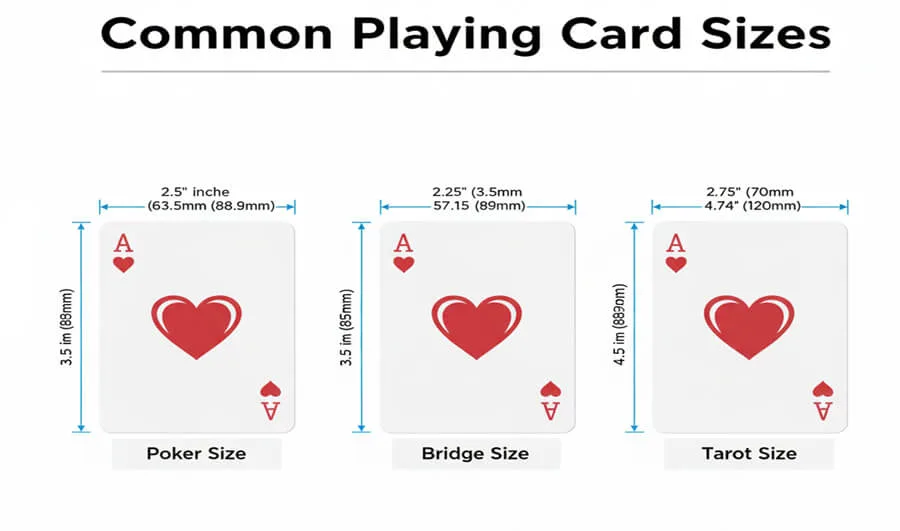
Tarot cards are larger than regular playing cards by design. This extra size showcases intricate artwork and symbolic details better.
Standard tarot cards measure 2.75 x 4.75 inches typically. Large format tarot decks can reach up to 3.5 x 6 inches. Mini tarot options measure around 1.75 x 3 inches for portability.
The dimensions of tarot cards allow detailed symbolic imagery to shine. This size is essential for readings and artistic expression. The larger canvas gives artists more room for creative interpretation.
Bicycle Playing Cards Specifications
Bicycle is manufactured by the United States Playing Card Company. They use standard measurements that match industry norms perfectly.
Bicycle card dimensions include:
- Poker size measuring 2.5 x 3.5 inches
- Bridge size at 2.25 x 3.5 inches
- Thickness of approximately 0.28mm per card
- Air-cushion finish paper stock material
Bicycle playing card dimensions follow industry standards precisely. This makes them interchangeable with other poker-size decks. Players can mix Bicycle cards with other brands seamlessly.
How Many Cards in a Deck?
A standard deck contains exactly 52 playing cards. These consist of 13 ranks multiplied by 4 suits. Most decks also include 2-3 joker cards typically. The total comes to 54-55 cards per pack usually.
Picture cards in a deck number exactly 12 total. That’s Jack, Queen, and King across all four suits.
Card Design Specifications for Printing
If you’re creating custom playing cards, follow these professional specifications. Proper design ensures high-quality printed results every time.
Resolution and Bleed Requirements
Use 300 DPI minimum for professional quality printing results. Extend designs 0.125 inches past the trim line for bleed. Keep critical elements 0.125 inches inside the trim for safety. Corner radius should range from 3.5mm to 6mm typically.
Poker Card Design Template
For standard poker-size cards, use these exact specifications:
- Canvas size of 2.75 x 3.75 inches including bleed area
- Trim size of exactly 2.5 x 3.5 inches
- Safe area measuring 2.25 x 3.25 inches inside
- Pixel dimensions of 825 x 1125 at 300 DPI
Playing Card Ratio
The standard playing card aspect ratio is approximately 5:7 width to height. This ratio creates the familiar rectangular shape we all recognize. It’s comfortable to hold and easy to shuffle efficiently.
Card Materials and Finishes
Card Thickness Options
Standard cardstock measures 0.2-0.25mm thick typically, using 270-300 GSM paper. Premium cardstock ranges from 0.28-0.32mm using 310-350 GSM material. Casino-grade cards measure 0.3-0.35mm with plastic coating applied.
Paper Types
Standard coated paper offers the most economical option available. The 120lb silk cover stock provides a luxury feel. It has a smooth finish that feels premium. Plastic-coated paper offers enhanced durability and water resistance. Cards made from 100% plastic are casino-grade and most durable.
Card Finishes
Glossy finish provides high shine and vibrant colors. Matte finish reduces glare with a softer appearance overall. Linen finish has a textured surface for superior grip. It also improves shuffling performance significantly. Air-cushion is Bicycle’s proprietary finish for smooth handling characteristics.
Regional Card Variations
Different cultures have developed unique card formats over centuries. These variations reflect local gaming traditions and preferences.
Indian Ganjifa cards are often circular with various sizes. Japanese Hanafuda cards measure 2.13 x 1.26 inches exactly. Bridge size is more common in Europe than poker. Chinese traditions include Mahjong tiles and smaller card formats.
Card Table Dimensions Reference
A standard card table designed for card games has specific measurements. These dimensions accommodate players comfortably during extended gaming sessions.
Square tables typically measure 32-36 inches on each side. Round tables range from 36-42 inches in diameter usually. Rectangular tables measure 48 x 30 inches for larger groups.
These dimensions accommodate 4-6 players comfortably with standard-size cards. Everyone can reach the center and see their cards easily.
Why Playing Card Size Matters
Every millimeter in playing card dimensions affects the user experience. The size impacts multiple aspects of card gameplay and handling.
Handling comfort requires cards to fit comfortably in average hands. Shuffling ease depends on proper dimensions enabling riffle and overhand shuffles. Readability needs adequate space for rank and suit visibility. Game functionality demands certain games require specific size cards. Storage compatibility means standard sizes work with commercial boxes and sleeves.
Custom Playing Card Uses
Custom decks with specific dimensions serve various practical purposes today. Businesses and individuals create specialized cards for many reasons.
Marketing and branding use corporate giveaways with logo designs prominently. Educational tools include flashcards and interactive learning games for students. Wedding favors feature personalized guest cards or creative save-the-dates for guests. Art projects create collector decks with custom artwork and unique designs. Indie game development requires unique game mechanics with specific size requirements. Magic performances need specialized sizes for specific trick techniques and illusions.
Frequently Asked Questions
What are the dimensions of a standard playing card?
A standard poker-size playing card measures 2.5 x 3.5 inches. In metric, that’s 63.5 x 88.9 mm exactly.
How big is a playing card in cm?
Standard playing card size in centimeters is 6.35 x 8.89 cm.
What is the difference between poker and bridge card sizes?
Poker cards are 2.5 inches wide exactly. Bridge cards are narrower at 2.25 inches wide. Both share the same 3.5-inch height measurement.
How long is a playing card?
The length or height of a standard card is 3.5 inches. That converts to 88.9mm in metric measurements.
What size are Magic: The Gathering cards?
Magic cards use standard poker dimensions of 2.5 x 3.5 inches. That’s 63.5 x 88.9 mm in metric measurements.
What are the measurements of a playing card in millimeters?
Standard playing card measurements are 63.5 x 88.9 mm for poker. Bridge size measures 57.15 x 88.9 mm instead.
How much does a deck of cards weigh?
A complete 52-card deck weighs approximately 90-120 grams total. The weight depends on whether it’s paper or plastic.
What is the standard TCG card size?
Most trading card games use poker-size dimensions consistently. That’s 2.5 x 3.5 inches or 63.5 x 88.9 mm.
Conclusion
Understanding playing card dimensions is essential for many purposes today. Whether you’re designing custom decks or selecting cards matters greatly. Maybe you’re just curious about the standards in the industry.
From the standard poker-size playing card at 2.5 x 3.5 inches forward. To specialized formats like tarot or TCG cards throughout the market. Each dimension serves a specific functional purpose in its category.
The size of playing cards has been refined over centuries. This optimization improves handling, gameplay, and manufacturing efficiency significantly. Whether you need bridge-size cards for easy hand management matters. Or jumbo cards for visibility in group settings is important. Choosing the right card dimensions directly impacts user experience and functionality.