



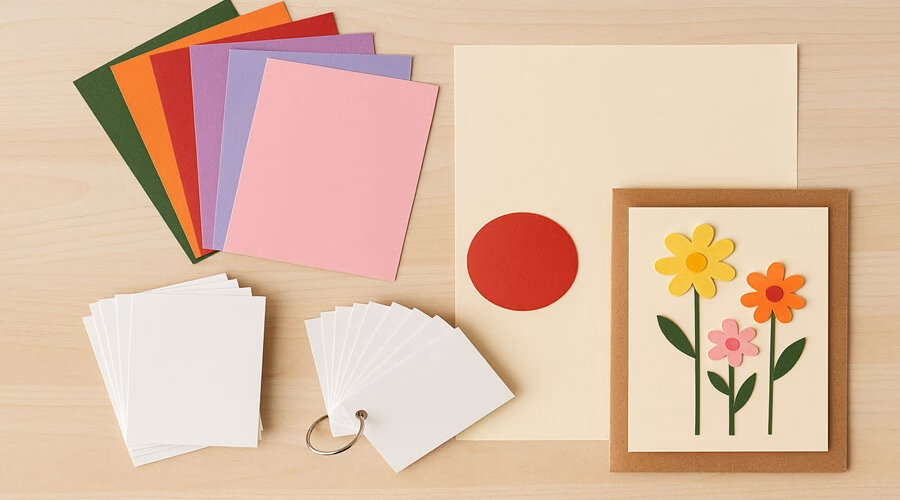
Cardstock is a thick, durable paper often referred to as cover stock or pasteboard that is heavier than standard printer paper but more flexible than cardboard. Typically weighing over 65 lb (176 gsm), it is the go-to material for print projects that require rigidity, durability, and a professional finish.
Unlike regular copy paper, which typically weighs 20 lb (75 gsm), cardstock holds its shape under pressure, resists tearing, and maintains clean edges after cutting or scoring. It is commonly categorized by its weight, measured in lbs or gsm, and is designed to hold up to handling making it a reliable choice for projects needing a more professional, substantial feel.
What Is Cardstock Made Of?
Cardstock is manufactured from compressed cellulose wood pulp fibres bonded under heat and pressure. The density of those fibres determines the final weight, stiffness, and surface quality of the sheet.
Some cardstock grades also contain cotton fibre, which increases durability and gives the sheet a slightly textured, premium feel. Cotton-blend cardstock is common in business card printing and wedding stationery.
Manufacturers treat the surface with coatings such as kaolin clay or calcium carbonate to produce smooth, glossy, or matte finishes. These coatings directly affect ink absorption, ink coverage, color vibrancy, and print sharpness.
Cardstock vs Regular Paper
The most important difference between cardstock and regular paper is basis weight. Standard office printer paper sits at 20 lb bond (75 gsm). Cardstock begins at 65 lb cover (176 gsm) and goes up from there.
Cardstock has a higher caliper (physical thickness) than copy paper, which is why it feels stiff when held at a corner without drooping. Regular paper flexes and buckles under moisture or pressure. Cardstock resists both, making it suitable for products that are handled repeatedly, such as menus, postcards, and packaging inserts.
It is also more rigid and durable than standard text or bond paper — a key reason professional designers and print shops choose it for high-visibility printing projects over lightweight alternatives.
Cover Stock vs Cardstock
These two terms describe the same category of material. Cover stock — also called coverstock — is the industry printing term used by commercial printers and paper suppliers. Cardstock is the consumer-facing term used in craft, retail, and office supply contexts.
When a printer quotes a job on “100 lb cover,” they are referring to the same type of sheet you would find labelled “cardstock” at a craft store. The naming difference is purely commercial, not technical.
The term pasteboard is also used in some traditional print and bookbinding contexts to describe the same stiff, heavy paper stock used for covers and structural sheet applications.
Cardstock Weight and Thickness Explained
Cardstock weight is measured in two systems that often cause confusion.
In the United States, paper is measured by basis weight the weight in pounds of 500 sheets cut to a standard size. Cover stock uses a 20 × 26 inch standard sheet, which is why 80 lb cover feels much heavier than 80 lb text, even though the numbers match.
Outside the United States, the ISO system measures paper weight in grams per square metre (gsm or g/m²). This system is linear and easier to compare directly across different paper types and suppliers.
A practical reference guide for common cardstock paper weights:
- 65 lb cover (176 gsm) — lightest cardstock; flexible, ideal for folded cards and scrapbook cardstock sheets
- 80 lb cover (216 gsm) — standard cardstock; common for greeting cards, DIY cards, and postcards
- 100 lb cover (270 gsm) — premium weight; used for business cards, invitations, and professional stationery
- 110 lb cover (300 gsm) — heavyweight; stiff, used in packaging, displays, and high-end printing projects
Caliper, measured in thousandths of an inch (points), is the physical thickness of a sheet. An 80 lb cover sheet typically measures around 8 to 10 points. Caliper matters when printing projects need to fit inside envelopes or slot-based display holders.
Types of Cardstock
Cardstock is not a single material. It varies by composition, texture, finish, size, and intended application. It comes in numerous colors, weights, and textures making it one of the most versatile paper substrates available for both professional printing and paper crafting projects.
By Texture
- Smooth cardstock has a uniform, flat surface ideal for detailed inkjet and laser printing. It produces sharp text and photographic images with high color accuracy.
- Laid cardstock carries a subtle ribbed pattern created during manufacturing using a wire mesh roller. It is common in formal correspondence, certificates, and letterpress printing.
- Linen cardstock mimics the weave pattern of linen fabric. The texture adds tactile premium quality and is a popular choice for wedding invitations and business stationery.
- Felt cardstock has a soft, slightly fuzzy surface created by pressing felt fibers into the sheet during production. It is typically used in high-end packaging and luxury brand stationery.
- Embossed cardstock features a raised or recessed pattern pressed into the surface using metal dies. It adds dimension and a premium tactile quality commonly used in wedding suites, greeting cards, and branded packaging.
- Vellum cardstock is a translucent, smooth-finish sheet often used as an overlay in scrapbooking, card making, and layered invitation suites. It is also available in paper packs and kits designed for paper crafting.
By Finish
The finish on cardstock determines how light interacts with the surface and how ink bonds with it.
- Glossy finish cardstock has a high-sheen coating that intensifies color saturation and gives images a polished, photographic quality similar to photo paper. It is the standard choice for postcards, product brochures, flyers, and photo prints.
- Matte finish cardstock absorbs light rather than reflecting it, producing a flat, elegant appearance. It reduces glare, makes text easier to read, and is the preferred choice for business cards, book covers, and presentation materials.
- Satin or silk finish sits between gloss and matte. It offers moderate sheen with better readability than full gloss, making it suitable for multi-image brochures, pamphlets, and magazine covers.
- Uncoated cardstock has no surface treatment. Ink absorbs directly into the fibres, which softens color reproduction but makes the sheet ideal for writing, rubber stamping, sewing projects, and letterpress printing.
By Size
Standard cardstock sizes follow the same dimensions as regular paper:
- Letter (8.5 × 11 inches) — most common for home and office printers
- A4 (210 × 297 mm) — international standard used outside the US
- 12 × 12 inches — dominant size in scrapbooking and craft applications
- Legal (8.5 × 14 inches) — used for legal documents and folded brochures
Custom sizes are cut by commercial printers using guillotine cutters or die-cutting machines depending on the project.
By Color
Cardstock is available in a full spectrum of solid colors as well as specialty options. Paper packs and kits sold by craft retailers typically bundle multiple colors together for arts and crafts and card making projects. Specialty options include:
- Kraft card stock — brown, recycled-fibre sheet with a natural, rustic aesthetic widely used for hang tags, packaging, and eco-friendly stationery
- Metallic cardstock — coated with a foil-like metallic finish in gold, silver, or copper
- Pearlescent cardstock — contains mica particles that create a soft iridescent shimmer
- Black core cardstock — a specialty photography mat board with a black inner layer visible when cut
Eco-Friendly Options in Cardstock
Environmental considerations are increasingly relevant in paper procurement. Several sustainable cardstock options now meet commercial print standards.
- FSC-certified cardstock is produced from wood pulp sourced from forests certified by the Forest Stewardship Council (FSC). This certification confirms responsible harvesting practices across the supply chain.
- Recycled cardstock is manufactured from post-consumer waste (PCW) paper. Many recycled cardstock grades now achieve brightness and smoothness levels comparable to virgin fibre stock.
- Sugarcane (bagasse) cardstock uses agricultural waste from sugarcane processing as the raw fibre source, reducing the demand for wood pulp entirely.
Brands such as Neenah Paper, Mohawk Fine Papers, and French Paper Company offer certified sustainable cardstock lines commonly used by print professionals and designers.
What Is Cardstock Used For?
Cardstock is widely used for invitations, brochures, playing cards, postcards, and file folders — as well as any application where paper must hold structure, accept high-quality printing, and survive handling. Its versatility means it spans professional print production and everyday arts and crafts equally well.
Common applications include:
- Business cards : Typically printed on 14 pt to 16 pt (100–110 lb cover) cardstock with gloss or matte lamination
- Greeting cards and postcards : Standard weight is 80 lb cover, either scored and folded or flat
- Wedding invitations and event stationery: Often printed on linen or cotton-blend 100 lb cover
- Packaging: Including custom boxes, folding cartons, product sleeves, and window boxes that require a stiff substrate to hold structure on retail shelves
- Hang tags: Printed on kraft card stock or coated cardstock and die-cut to shape for product labelling
- Scrapbook cardstock and paper crafts: 65 lb to 80 lb cover in a wide range of colours and textures
- Brochures, pamphlets, and flyers: Printed on 80 lb to 100 lb cover with gloss or matte finish
- Certificates and diplomas: Often printed on 80 lb laid or linen uncoated cardstock
- Menus: Printed on heavy coated cardstock for durability through repeated handling in hospitality settings
- Displays: Used in retail point-of-sale displays where lightweight rigidity is required
What Can You Make with Cardstock?
In craft and DIY contexts, cardstock is the primary structural material for a wide range of handmade projects. Its versatility makes it equally at home in professional printing and hands-on arts and crafts workflows.
- Card making is the most common application. Cardstock provides the base layer (card blank) and decorative elements such as die-cuts, punched shapes, and layered panels. DIY cards made from cardstock are a staple of the home crafting market.
- Scrapbooking uses 12 × 12 inch scrapbook cardstock sheets as page backgrounds, journaling blocks, and photo mats. Paper packs and kits bundling multiple cardstock colors are sold specifically for scrapbook layouts.
- Paper flowers and 3D embellishments are cut from cardstock using Cricut or Silhouette die-cutting machines, then shaped by hand. The stiffness of the material holds dimensional shapes without collapsing — a key reason die-cutting is one of the most popular cardstock applications in arts and crafts.
- Box and envelope templates can be scored, folded, and assembled from cardstock without gluing. Many printable packaging templates — including custom boxes and product sleeves — are designed specifically for 80 lb to 110 lb cover weight sheets.
- Bookmarks, tags, and labels are punched or cut from cardstock scraps. Sewing projects also use cardstock as pattern templates and stabilisers, as the material holds a precise edge better than regular paper when tracing and cutting fabric.
How to Print on Cardstock
Most desktop inkjet and laser printers handle cardstock up to 80 lb cover (216 gsm) without issue. Sheets heavier than 100 lb cover (270 gsm) may require a printer with a straight paper path to prevent jamming.
Before printing, always check the maximum paper weight listed in your printer’s specifications. Epson, Canon, and HP all publish gsm limits in their printer manuals and on their support pages.
Ink coverage is an important variable when printing on cardstock. Heavy ink coverage on uncoated cardstock can cause surface buckling or slow drying, particularly with inkjet printers. Reducing total ink coverage in your print driver settings helps prevent this on absorbent uncoated stocks.
For best results:
- Load cardstock one sheet at a time in the manual feed tray, not the paper cassette
- Select the correct media type in your printer driver choose “cardstock,” “heavy paper,” or “thick paper” depending on your printer brand
- Allow extra drying time for inkjet prints, as the denser surface takes longer to cure
- Use laser printers for high-volume runs, as laser toner bonds to coated cardstock more consistently than inkjet ink
Commercial print shops use offset lithography presses and digital presses such as the HP Indigo or Xerox iGen series, which are calibrated to handle a full range of cardstock weights and finishes at production volumes.
Benefits of Using Cardstock
The functional advantages of cardstock over standard paper come directly from its material properties. It is more rigid and durable than standard text or bond paper, making it a reliable, professional choice across a broad range of printing projects.
- Durability: The higher fibre density resists tearing, moisture, and edge damage through repeated handling. For example, a business card printed on 16 pt cardstock can survive months of wallet storage without significant wear.
- Print quality: Coated cardstock holds ink pigments at the surface rather than absorbing them into the fibre, which produces sharper edges, richer colours, and higher contrast in photographic images. The result is closer to photo paper quality than standard printer paper can achieve.
- Structural rigidity: Cardstock holds flat under its own weight, which is essential for folded products like greeting cards, brochures, and packaging — including folding cartons and window boxes that must maintain a clean, professional shape.
- Versatility: The same material category spans DIY cards, professional stationery, custom boxes, hang tags, displays, and specialty packaging applications, making cardstock one of the most widely used substrates in both professional and consumer markets.
- Professional perception: Research in print marketing consistently shows that heavier paper stocks increase the perceived quality and credibility of printed communications. In the case of business cards, weight and finish are directly linked to brand impression at first contact.
Frequently Asked Questions
Is cardstock the same as construction paper?
No. Construction paper is an uncoated, low-quality paper typically weighing 50 lb to 60 lb text. It fades quickly and is not suitable for printing. Cardstock is a heavier, higher-quality substrate designed for printing and durable use.
Can you run cardstock through a Cricut or Silhouette machine?
Yes. Both Cricut and Silhouette cutting machines are designed for die-cutting cardstock up to 100 lb cover. Heavier or specialty finishes may require a deeper blade setting or a second pass.
What is the best cardstock weight for greeting cards?
80 lb cover (216 gsm) is the industry standard for folded greeting cards. It folds cleanly along a scored line, holds its shape, and fits standard A2 and A6 envelopes without excess bulk.
What is the difference between cardstock and cardboard?
Cardstock is a single-ply sheet up to approximately 110 lb cover (300 gsm). Cardboard — also called paperboard or boxboard — is a multi-ply or corrugated construction that begins where cardstock ends, typically above 300 gsm. Paperboard is used for structural packaging such as shipping boxes, while cardstock is used for lighter packaging applications like folding cartons, product sleeves, and custom boxes.
What is the difference between cardstock and photo paper?
Photo paper is coated specifically to hold photographic inkjet inks with maximum color gamut and gloss. Cardstock is a structural substrate first. While glossy cardstock shares some surface properties with photo paper, photo paper prioritises image quality over rigidity, whereas cardstock prioritises structural performance.






3 Comments
I had no idea cardstock could be so versatile! It’s great to know that the weight of the paper really determines its best use—especially for packaging and branding. The variety of finishes and textures must also make it a great choice for creative projects.
Thanks for breaking down the different types and weights of cardstock—it’s easy to get overwhelmed when choosing packaging materials. I especially appreciated the practical use cases mentioned, as they help clarify how weight and texture can impact both functionality and aesthetics. It’s a helpful resource for anyone looking to make informed decisions without overcomplicating the process.
This is a great breakdown of the different types of cardstock! I never realized how much the finish and weight can impact the final product. For anyone doing DIY projects, understanding these details can really make a difference in the overall look and feel.